












Embracing Adaptive Technologies for a Sustainable Modal Shift
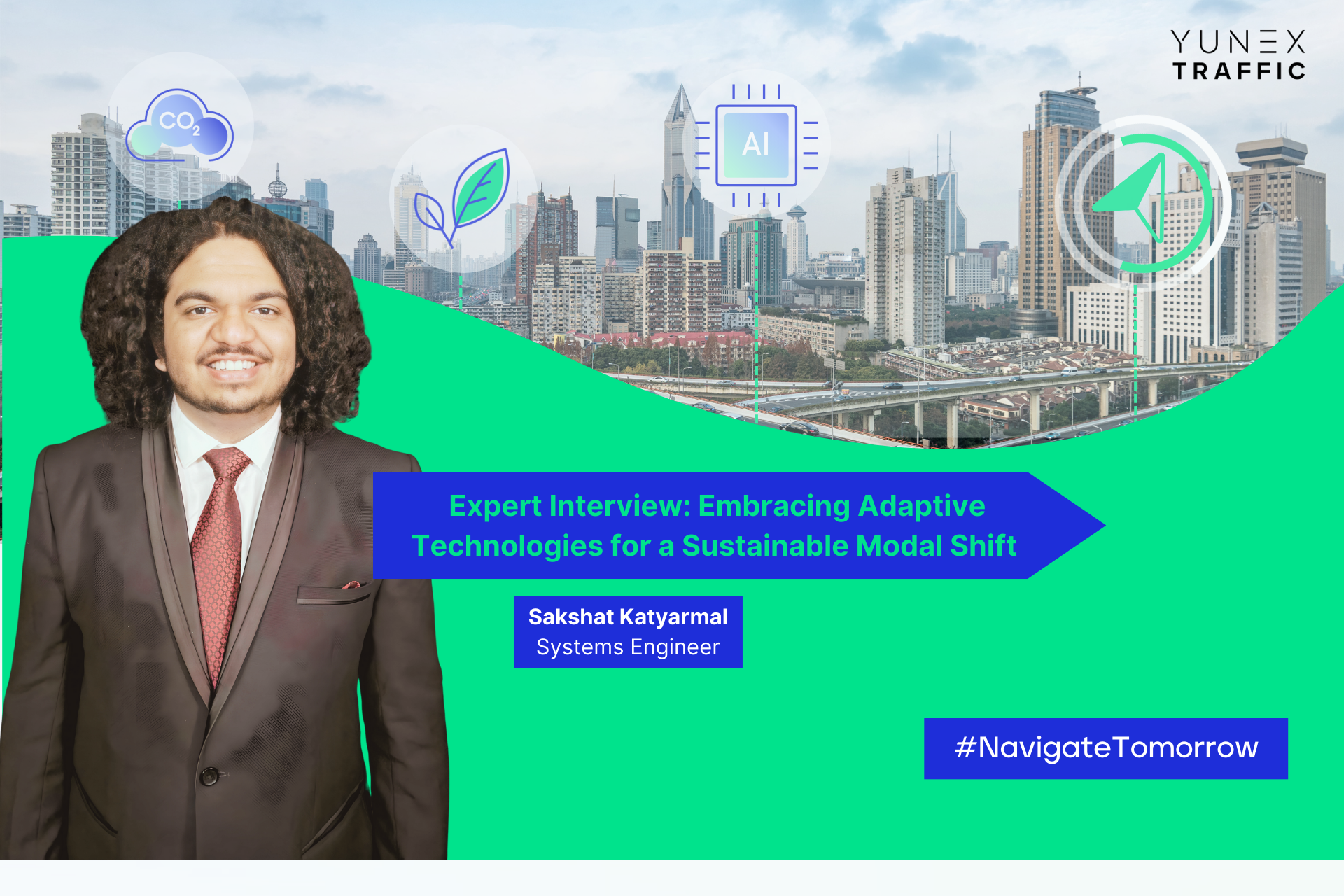
AN INTERVIEW WITH LOCAL EXPERT SHAKSHAT KATYMAL – SYSTEMS ENGINEER AT YUNEX TRAFFIC
In the rapidly evolving landscape of urban transportation, adaptive technologies are crucial in promoting multi-modal transportation. These technologies facilitate a sustainable shift by integrating various modes of transport, such as cars, public transit, cycling, and walking, into a cohesive system.
To gain deeper insights into this transformation, we sat down with Sakshat Katyarmal, a Systems Engineer at Yunex Traffic US who is at the forefront of optimizing traffic flow and enhancing mobility for all road users.
Through his experiences and expertise, Sakshat shares how adaptive technologies are reshaping our cities, making them more efficient and eco-friendly by supporting diverse transportation options.
This shift is crucial in Intelligent Transportation Systems (ITS) because it promotes more sustainable and efficient transportation options, reducing traffic congestion, emissions, and reliance on single-occupancy vehicles.
What inspired you to pursue a career as a Systems Engineer and what excites you most about working with adaptive technologies?
Sakshat: I pursued a career in systems engineering because I love integrating and designing complex systems. Troubleshooting and solving problems gives me a thrill, and I enjoy the constant challenge and learning opportunities this field offers. I love that my work directly improves people’s lives by reducing traffic congestion and emissions, making daily commutes less stressful and more eco-friendly. Being part of cutting-edge innovations excites me, as I continuously learn and contribute to future-ready solutions for smart cities.
Can you share a memorable experience or project that had a significant impact on a community through the implementation of adaptive technologies?
Sakshat: One memorable experience was being part of an adaptive project where we managed to reduce travel time at a busy corridor by 20%. Before our intervention, the closely spaced intersections caused constant backups. It was incredibly rewarding to see the positive impact on the community, as side streets were served quicker and overall traffic flow improved significantly. Knowing that our work made daily commutes smoother and less stressful for so many people was truly fulfilling.
How do you see the role of systems engineers evolving with the advancement of adaptive technologies?
Sakshat: With the advancement of adaptive technologies, systems engineers will evolve to work with diverse data sources and services, including connected vehicles. There will be a significant shift in their deployment approach, as they will need to optimize systems not just for car traffic, but also for pedestrians, cyclists, and public transportation. This holistic perspective will accelerate modal shift and as a result, enhance overall mobility and safety for all road users.
What advancements or innovations in adaptive technologies are you most excited about for the future?
Sakshat: I am really excited about Connected Vehicle integration and the multimodal capabilities of adaptive systems prioritizing pedestrians.
How do you envision the future of urban transportation, and what role do you see adaptive technologies playing in it?
Sakshat: I envision the future of urban transportation focusing on moving people rather than just cars. Adaptive technologies will play a crucial role in this transformation. AI will be pivotal, leveraging vast amounts of data to optimize transportation systems.
What do you think are the most important qualities for someone working in this field to have?
Sakshat: In this field, it’s crucial to be meticulous and careful to minimize mistakes. Being adaptable and open to new ideas is essential, as technology is constantly evolving. A passion for learning and problem-solving is also vital, as these qualities drive innovation and continuous improvement.
How do you balance the technical demands of your job with the need to consider the human and community aspects of transportation planning?
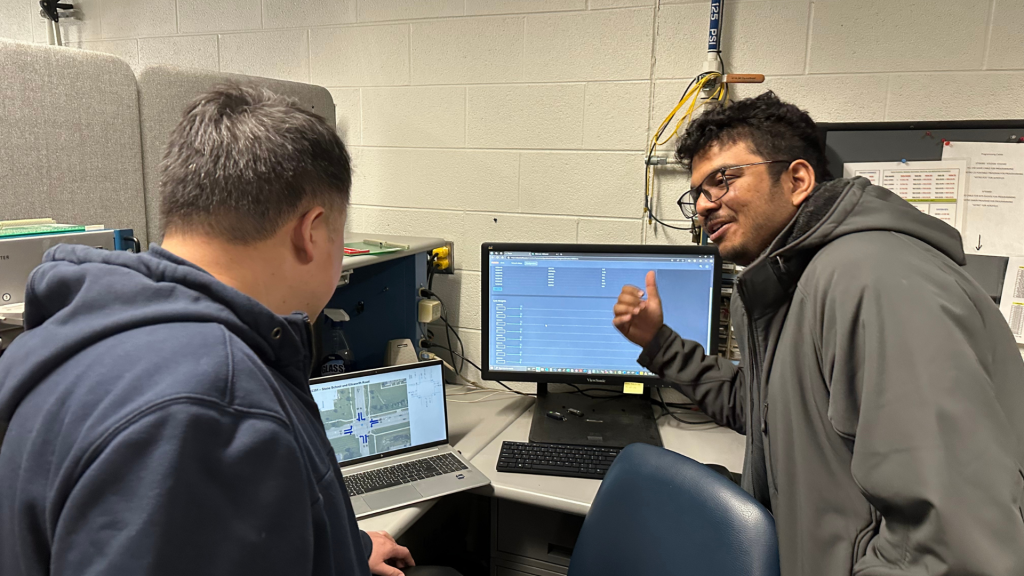
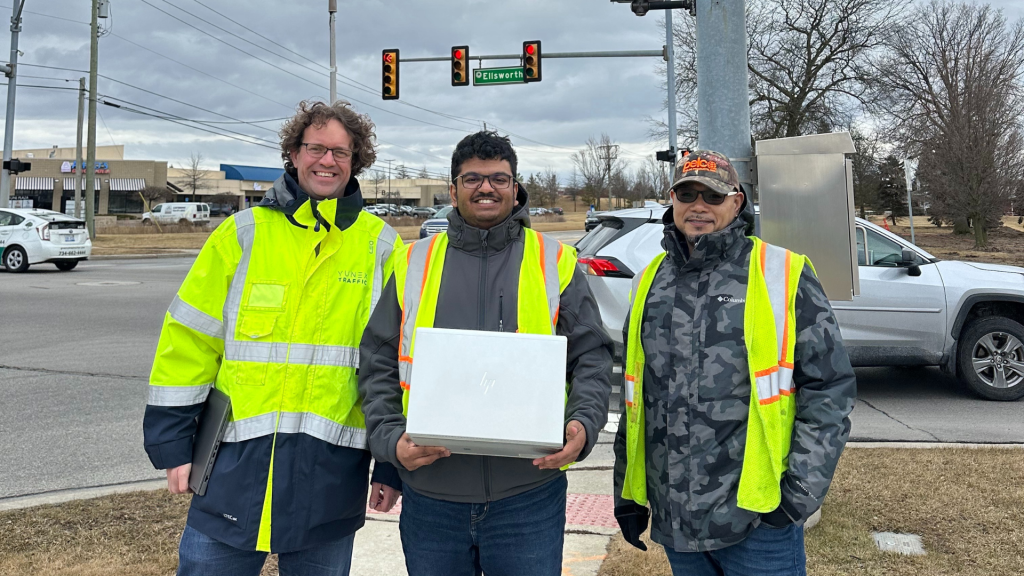
Sakshat: Balancing the technical demands of my job with the human and community aspects of transportation planning involves close communication with local traffic engineers. They provide insights into daily traffic patterns, which we incorporate into our fine-tuning. For example, in Seattle, we noticed that during the PM peak, a certain left turn gets congested because many people stop to fill gas at Costco. Field visits and hands-on deployment of systems help us understand these nuances better. Since cars are driven by humans, we also account for behaviors like speeding, ensuring our systems have a window of acceptance to accommodate real-world driving habits and be cautious.
How do you stay updated with the latest trends and developments in traffic engineering and smart city technologies?
Sakshat: To stay updated with the latest trends and developments in traffic engineering and smart city technologies, I attend at least two conferences annually. These events allow me to participate in talks, committee meetings, and network with researchers. I also keep an eye on emails from the Transportation Research Board (TRB) and regularly read magazines like ITS International. This combination of activities helps me stay informed and connected with the latest advancements in the field.
Can you tell us about a mentor or role model who has significantly influenced your career?
Sakshat: My colleague Marc Segal has been a significant mentor since my early days at Yunex Traffic. He taught me a lot about traffic systems, and our brainstorming sessions were incredibly insightful. Marc also helped me understand the customer-facing aspects of our work. Additionally, my colleague James Chavis has been a mentor in the technical aspects of traffic systems, sharing his extensive knowledge on controllers and adaptive systems. Their guidance has been invaluable in shaping my career.
What advice would you give to young engineers or students interested in pursuing a career in traffic engineering and smart city technologies?
Sakshat: For young engineers or students interested in traffic engineering and smart city technologies, my advice is to stay curious and open to learning new things. Keep yourself updated with the latest research and advancements in the field. Develop strong problem-solving skills and be ready to troubleshoot challenges head-on. Embracing these qualities will equip you to make a significant impact in this exciting and evolving field.
And finally, we would love you know what you enjoy doing outside of work, and how those activities influence your approach to your professional life?
Sakshat: Outside of work, I am a singer and musician. This passion helps me immensely when presenting or giving demos to customers, as it helps me overcome stage fright. Just like in a performance where mistakes are not an option, the same precision and attention to detail are crucial when running a SCOOT or Yutraffic Fusion system at an intersection. This discipline and confidence from my musical pursuits directly influence my professional approach, ensuring I deliver my best in both arenas.
Conclusion
Adaptive technologies are revolutionizing urban transportation, enabling a sustainable modal shift that prioritizes efficiency and eco-friendliness. Through the experiences and insights of systems engineers like Sakshat Katyarmal, we can see the transformative potential of these technologies in creating smarter, more connected cities. As we continue to innovate and embrace these advancements, the future of urban transportation looks promising, with adaptive systems leading the way.